
For parents

You are not the problem for asking questions.

If you have ever walked out of an appointment feeling smaller than when you walked in, this page is for you. Twenty-five years of experience taught me one thing above all: parents who ask careful questions are doing what good parents do. You deserve a clinician who treats that as a feature, not a fault.

Pamela Garfield-Jaeger with Jessica Brassington, founder of Mama Bears Rising
With Jessica Brassington, founder of Mama Bears Rising.

The core idea

No one gets a pass just because they have credentials.

You don't have to accept an expert's answer just because they're the expert. If something feels wrong, trust that instinct, and get equipped to ask the right questions.

I will not hand you a fixed formula for your family. What I will do is help you think clearly, speak up, and recognize when a clinician is treating you as a partner instead of a problem.

The free guide

What makes a good therapist.

A short, plain-spoken PDF for anyone choosing a therapist. It covers what to look for, red flags to watch for, and the screening questions that separate a clinician from a salesperson. Free.

Inside the guide

  • What a good therapist does, and what they never do
  • Red flags that should make you pause before a second appointment
  • Screening questions to ask on the phone or in the first session
  • How to tell if a therapist is a political agent
  • How to detect when a therapist is projecting their own unmet needs onto your child

If this sounds like you

  • You are told that there is something wrong with you the moment you started asking questions.

  • You were handed a diagnosis before anyone really knew your child.

  • You were told that loving concern is the same as standing in the way.

  • You are looking for a clinician who will think with you, not at you.

You are not alone.

Pamela Garfield-Jaeger, The Truthful Therapist, with James Lindsay and fellow advocates at the first Moms for Liberty national summit
With James Lindsay and fellow advocates at the first Moms for Liberty national summit.

You are not alone

Parents are the ones forcing change.

Every real shift I have seen started with a parent who refused to be talked out of what they knew about their own child. I stand with those parents at conferences, hearings, and kitchen tables, and there are more of them every year.

What to ask

Six questions before the first appointment.

You do not need a clinical vocabulary. You need six clear questions and a willingness to listen for the answer.

  1. Question 01

    How will you decide whether therapy is the right tool right now?

    A thoughtful clinician welcomes this question. Vague answers are a signal.

  2. Question 02

    What does progress look like, and how will we know if it isn't happening?

    Good care has checkpoints. If there is no way to fail, there is no way to succeed.

  3. Question 03

    How will you keep me informed, and where do you draw the line on confidentiality?

    Parents are part of the care. Reasonable boundaries are fine, silence is not.

  4. Question 04

    What are some aspects of mainstream therapy that you disagree with or question?

    You want a therapist who will think for themselves and not follow dogma, someone with critical thinking.

  5. Question 05

    What is your theoretical framework as a therapist? How do you conceptualize cases?

    A thoughtful clinician can name how they think about problems and why. If they cannot, they are following a script, not a framework.

  6. Question 06

    Do you think conversations about systemic oppression belong in therapy sessions?

    Therapy should focus on the individual's personal growth and mental health, not on political or ideological narratives. A clinician who treats therapy as a venue for social change is not putting your child's needs first.

Green flags & red flags

How to evaluate the first session.

Green flags

Signs of a truthful clinician.

  • +Takes a full history before naming anything
  • +Treats you as a partner in the care
  • +Names uncertainty out loud
  • +Begins to develop and communicate treatment goals with your collaboration
  • +Welcomes second opinions

Red flags

Time to slow down.

  • Hands you a diagnosis on day one
  • Treats your questions as interference
  • Promises certainty no clinician can promise
  • Makes threats about suicide when there is no imminent danger
  • Pressures you toward a single intervention

This week

Three small steps.

01

Write the history down.

A page of notes (what changed, when, and who was around) is the most useful thing you can bring to a first appointment.

02

Ask for the plan in writing.

If a clinician cannot summarize the plan in a paragraph you can read, the plan is not yet a plan.

03

Trust your own observations.

You have known your child longer than anyone else. That knowledge belongs in the conversation.

Ways to go deeper

Three resources depending on your needs.

Start with the free guide. If you want a full library, the self-paced course covers it. If you need a thinking partner for a decision you are facing this week, book a one-on-one.

Free

What Makes a Good Therapist

Free

A short, plain-spoken PDF for anyone choosing a therapist. What to look for, red flags to watch for, and screening questions to ask.

  • +Delivered to your inbox
  • +Read in under twenty minutes
  • +Use it for any first appointment
Get the free guide

Self-paced course

Parent's guide to mental health, complete

$25

The full course library. Every lesson previously sold separately, bundled and updated.

  • +One-time purchase, no monthly fees
  • +All future updates included
  • +Work through it at your own pace
Enroll for $25

One-on-one

Consultation with the Truthful Therapist

$95

A private session for the decision you are facing right now. You set the agenda.

  • +Direct, situation-specific feedback
  • +Prepare for a specific appointment
  • +A thinking partner with 25 years of experience
Book a consultation

Books

Written for parents.

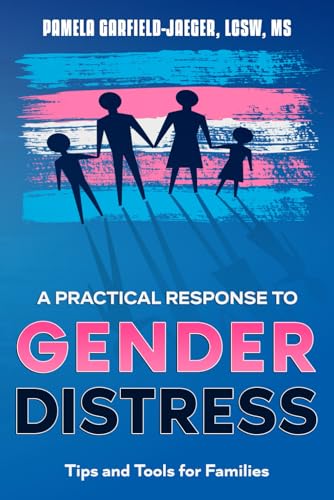
Two books to put in your hands: a direct framework for navigating gender distress as a family, and a children's story about self-acceptance.

All books
Cover of A Practical Response to Gender Distress by Pamela Garfield-Jaeger, LCSW.

For parents and clinicians

A Practical Response to Gender Distress

A direct, non-ideological framework for families navigating a difficult moment.

Buy on Amazon
Cover of Froggy Girl by Pamela Garfield-Jaeger, illustrated by Nicholas Booms.

A children's book

Froggy Girl

An honest and fun book for kids and the grown-ups reading them, about appreciating who you are.

Buy on Amazon

Common questions

Things parents actually ask.

My child's clinician says I'm being difficult. Am I?

Asking honest questions is not being difficult. If a clinician treats reasonable questions as interference, that is information about the clinician, not about you.

Do I have a right to know what happens in my child's sessions?

Confidentiality in minor therapy is real, and it has limits. You are entitled to a treatment plan, progress checkpoints, and a clear conversation about safety. Silence is not a clinical standard.

What if I disagree with a diagnosis or recommendation?

Second opinions are normal and welcomed by thoughtful clinicians. Ask what would change their mind, and ask to see the alternatives in writing.

Is this site a substitute for therapy?

No. Everything here is educational. It is meant to help you walk into the room better prepared, not to replace care. If it is an emergency in the USA, dial 911.

Will you tell me what to do about my specific situation?

Not on this page. The free guide and the course library are general. If you want feedback on your family's specific situation, book a one-on-one consultation.

For parents of adult children

Supporting an adult child in gender distress.

The questions change when your child is grown. Here is how to stay connected, stay honest, and stay useful.

My adult child announced a trans identity. Should I still ask questions?

Yes, with care. Adulthood means your child makes their own decisions, but it does not mean you must pretend you have no concerns. Curiosity delivered with respect preserves the relationship better than either silence or confrontation.

How do I keep the relationship without affirming something I believe is harmful?

Set boundaries around language and medical decisions without setting boundaries around love. You can use their name without endorsing every belief, and you can stay present without funding or facilitating interventions you think are unsafe.

What if my adult child wants hormones or surgery?

You cannot stop a legal adult, but you can slow the conversation down. Ask whether they have been screened for underlying mental-health conditions, whether they have seen detransitioners' stories, and whether they understand the irreversible effects. Offer to help them find a thoughtful clinician.

How do I handle pronouns and name changes?

There is no one-size-fits-all answer. Some parents use a new name to protect the relationship; others cannot in good conscience. Decide what you can live with, explain it calmly, and refuse to be bullied into either extreme.

Is it too late to help an adult child?

No. Adults change their minds every day. Your steady presence, without capitulation, is often what they remember when the dust settles. Stay reachable, stay honest, and do not let ideology replace the real relationship.

Free guide

What makes a good therapist.

What to look for, red flags to watch for, and screening questions to ask, all in one short, plain-spoken PDF. Free, no upsell on the next screen.

  • Delivered straight to your inbox
  • Readable in under twenty minutes
  • Unsubscribe any time, no questions asked

Send me the guide

By subscribing you agree to receive occasional emails from Pamela. This site is educational and is not a substitute for clinical care.